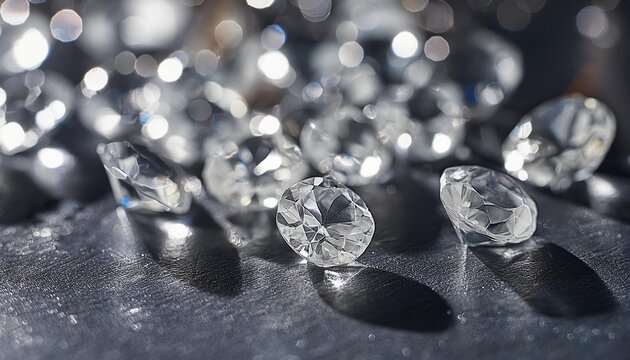

In the amazing universe of man made diamonds, two conspicuous advancements, HPHT (High Tension High Temperature) and CVD (Substance Fume Testimony), stand apart for their parts in making these exceptional jewels. As the demand for moral, maintainable, and reasonable diamonds keeps on rising, understanding the distinctions between these techniques is significant for the two purchasers and industry experts. This article dives into the complexities of HPHT vs CVD processes, looking at their benefits, limits, and interesting qualities.
Introduction to Man Made Diamonds
Man made diamonds, otherwise called engineered diamonds, are created in research centers to repeat the normal precious stone development process. These diamonds have similar physical and synthetic properties as normal diamonds, making them an alluring option for those looking for excellent and moral choices. The formation of these diamonds depends vigorously on two essential strategies: HPHT and CVD.
Grasping HPHT Diamonds
What is HPHT?
HPHT, or High Strain High Temperature, is a technique that imitates the regular circumstances under which diamonds structure. This cycle includes exposing carbon to very high tensions and temperatures, like those tracked down in the World’s mantle.
The HPHT Cycle
The HPHT cycle starts with a carbon source, normally graphite, which is set in a high tension, high temperature chamber. The chamber is then warmed to temperatures around 1,300 to 1,600 degrees Celsius (2,372 to 2,912 degrees Fahrenheit) and exposed to tensions of roughly 5 to 6 GPa (gigapascals). Under these circumstances, the carbon molecules orchestrate themselves into a jewel grid structure, bringing about the development of a manufactured precious stone.
Benefits of HPHT Diamonds
Realness: HPHT diamonds are synthetically and actually indistinguishable from regular diamonds, highlighting a similar brightness and hardness.
Variety Varieties: HPHT considers the creation of diamonds in a scope of varieties, from vapid to distinctive tints, including blue and yellow.
Cost Proficiency: For the most part, HPHT diamonds can be more financially savvy contrasted with regular diamonds, offering comparative quality at a lower cost.
Constraints of HPHT Diamonds
Consideration Examples: HPHT diamonds might show interesting incorporation designs that can here and there be distinguished by gemologists.
Energy Utilization: The HPHT cycle requires critical energy, which can influence its natural impression.
Investigating CVD Diamonds
What is CVD?
CVD, or Compound Fume Testimony, is a technique that includes the statement of carbon molecules onto a substrate to frame man made diamonds. Not at all like HPHT, CVD doesn’t depend on outrageous tension and temperature conditions but instead uses a gas stage response to develop diamonds.
The CVD Cycle
In the CVD cycle, a substrate is put in a vacuum chamber loaded up with a carbon containing gas, like methane. The chamber is then warmed to around 700 to 1,000 degrees Celsius (1,292 to 1,832 degrees Fahrenheit), and the gas is ionized to make a plasma. The carbon particles from the plasma store onto the substrate and solidify into precious stone.
Benefits of CVD Diamonds
Virtue: CVD diamonds are known for their high immaculateness and absence of considerations, bringing about stones with remarkable clearness.
Ecological Effect: CVD diamonds by and large have a lower natural effect contrasted with HPHT, as they require less energy and produce less emanations.
Customization: The CVD cycle takes into consideration exact command over the precious stone’s properties, including its size, shape, and variety.
Restrictions of CVD Diamonds
Development Time: The CVD interaction can be more slow contrasted with HPHT, possibly prompting higher creation costs.
Variety Reach: While CVD diamonds can be created in different varieties, accomplishing specific tints might be more difficult contrasted with HPHT.
Looking at HPHT and CVD Diamonds
Quality and Appearance
Both HPHT and CVD diamonds have similar actual properties as regular diamonds, including hardness and splendor. Nonetheless, their appearance can contrast in light of the creation technique. HPHT diamonds might have particular consideration designs, while CVD diamonds are frequently noted for their lucidity and virtue.
Cost Contemplations
The expense of man made diamonds can change contingent upon the creation strategy. HPHT diamonds are regularly more reasonable because of the lower creation costs related with the HPHT interaction. CVD diamonds, while here and there more costly, offer high immaculateness and customization choices that can legitimize their greater cost.
Ecological Effect
Both HPHT and CVD techniques are all the more harmless to the ecosystem contrasted with conventional precious stone mining. Be that as it may, CVD diamonds for the most part have a lower natural impression because of their lower energy utilization and diminished outflows.
Conclusion
In the realm of man made diamonds, HPHT and CVD address two creative ways to deal with jewel creation, each with its own arrangement of benefits and restrictions. HPHT diamonds offer a practical choice with a wide scope of variety prospects, while CVD diamonds give high immaculateness and adaptable elements. Understanding these distinctions can assist purchasers with settling on educated decisions and value the worth regarding these morally created jewels.
Whether you are thinking about a man made jewel for a wedding band, an extraordinary gift, or basically to upgrade your assortment, both HPHT and CVD diamonds offer remarkable quality and magnificence. By investigating the exceptional qualities of every strategy, you can choose the ideal precious stone that addresses your issues and inclinations.